

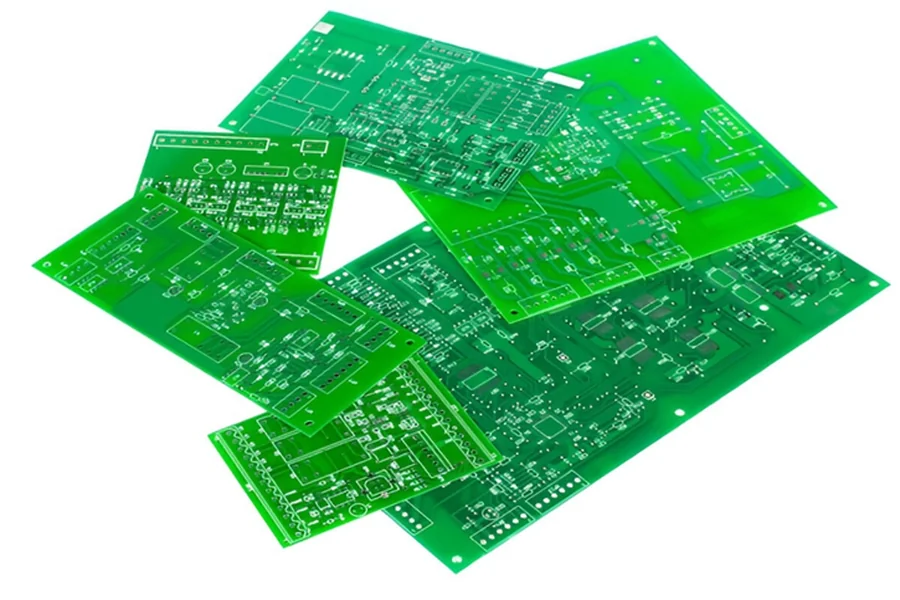
An FR4 Printed Circuit Board is one of the most widely used PCB materials in the electronics industry due to its excellent balance of strength, durability, and cost-effectiveness. The term “FR4” refers to a grade of flame-retardant fiberglass-reinforced epoxy laminate, where “FR” stands for flame resistant, and “4” indicates the specific material grade. It offers exceptional mechanical strength, good electrical insulation, and stability across various environmental conditions, making it ideal for a wide range of applications.
Whether it is for consumer electronics, automotive systems, or industrial control equipment, FR4 PCBs have become the industry standard for reliable and affordable circuit board manufacturing.
Key Properties of FR4 Printed Circuit Board
FR4 material offers unique physical, thermal, and electrical properties that make it a preferred choice for PCB fabrication:
- High Mechanical Strength – The fiberglass structure gives FR4 boards excellent rigidity and resistance to mechanical stress.
- Flame Retardancy – Meets UL94V-0 flammability standards, ensuring safety in electrical systems.
- Excellent Electrical Insulation – Maintains stable dielectric properties over a wide frequency range.
- Moisture Resistance – Performs well in humid environments without significant degradation.
- Thermal Performance – Standard FR4 operates well up to 130–140°C, while high-Tg FR4 variants handle even higher temperatures.
- Cost-Effectiveness – More affordable compared to advanced substrates like ceramic or PTFE.
These properties make FR4 versatile enough for both single-layer and complex multilayer PCB designs.
Types of FR4 Printed Circuit Boards
FR4 PCBs come in various configurations depending on their intended use:
- Single-Sided FR4 PCBs – Components are mounted on one side of the board with copper traces on the other.
- Double-Sided FR4 PCBs – Conductive layers on both sides allow more complex circuit designs.
- Multilayer FR4 PCBs – Multiple FR4 layers stacked together to increase circuit density for high-performance electronics.
- High-Tg FR4 PCBs – Designed for high-temperature applications, offering improved thermal stability.
- FR4 with Controlled Impedance – Used for high-frequency signal transmission in communication devices.
Advantages of FR4 Printed Circuit Board
Using an FR4 Printed Circuit Board provides several advantages that make it a go-to choice for engineers and manufacturers:
- Versatility – Suitable for a wide range of electronic products, from simple gadgets to complex aerospace equipment.
- Durability – Can withstand physical stress, vibration, and environmental exposure.
- Design Flexibility – Compatible with various PCB manufacturing processes, including drilling, etching, and plating.
- Cost Efficiency – Balances performance and price, making it economical for mass production.
- Wide Availability – FR4 material is globally accessible, ensuring a steady supply chain for manufacturers.
Applications of FR4 Printed Circuit Board
FR4 PCBs are used in almost every electronics sector, including:
- Consumer Electronics – Smartphones, laptops, televisions, and gaming devices.
- Automotive Systems – Engine control units, lighting systems, and infotainment.
- Industrial Equipment – Control systems, sensors, and automation machinery.
- Telecommunications – Routers, switches, and signal transmission equipment.
- Medical Devices – Diagnostic tools, monitoring systems, and portable medical devices.
- Aerospace and Defense – Navigation systems, communication devices, and control panels.
Their adaptability and reliability make FR4 boards a preferred choice in both low- and high-volume manufacturing.
Limitations of FR4 Printed Circuit Board
While FR4 offers many benefits, it also has some limitations:
- Thermal Limitations – Standard FR4 may not perform well in extreme high-temperature environments.
- Signal Loss at High Frequencies – Not ideal for very high-frequency RF applications where advanced materials like Rogers or Teflon are preferred.
- Moisture Absorption – Although moisture-resistant, it is not completely waterproof, which can affect performance in extreme humidity.
For applications that demand ultra-high performance, alternative substrates may be more suitable.
Choosing the Right FR4 Printed Circuit Board
When selecting an FR4 PCB, factors such as layer count, Tg value, copper thickness, and impedance requirements should be considered. For high-temperature or high-power applications, high-Tg FR4 or FR4 with enhanced thermal conductivity is recommended. Additionally, working with a manufacturer experienced in FR4 PCB fabrication ensures optimal design and production quality.
Conclusion
The FR4 Printed Circuit Board remains the backbone of modern electronics, offering an ideal combination of performance, durability, and affordability. Its versatility allows engineers to use it in applications ranging from simple devices to complex industrial systems. By understanding its properties, benefits, and limitations, you can make informed decisions when designing and sourcing FR4-based PCBs.
If you are looking for a reliable FR4 PCB manufacturer who can deliver high-quality boards tailored to your specifications, partnering with an experienced supplier will ensure consistent performance and long-term reliability for your electronic projects.
